Items
Class
HC1 Heritage Entity
-
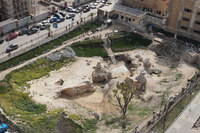 Shatby Necropolis The Shatby Necropolis in Alexandria, Egypt, is a captivating historical burial site that bears witness to the city's rich past. Nestled along the Mediterranean coastline, this ancient necropolis is a testament to the diverse cultures that have shaped Alexandria over the centuries. Dating back to the Hellenistic and Roman periods, the Shatby Necropolis is characterized by intricately designed tombs, mausoleums, and burial chambers. The site features a blend of architectural styles, reflecting the influence of Greek, Roman, and Egyptian traditions. Visitors can explore the remnants of grand structures adorned with ornate carvings, providing insights into the city's cultural and religious practices during its heyday. The Shatby Necropolis stands as a poignant reminder of Alexandria's role as a crossroads of civilizations, preserving the stories of those who once called this vibrant city home.
 -
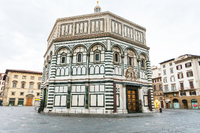 Baptistery of Saint John in Florence The Baptistry of St. John, located in the heart of Florence, Italy, is a magnificent architectural gem that stands as one of the city's most iconic landmarks. This octagonal structure, known as the Battistero di San Giovanni in Italian, boasts a rich history dating back to the early Christian era. Constructed between the 11th and 12th centuries, the Baptistry is renowned for its stunning Romanesque design. The exterior is adorned with white and green marble, showcasing intricate patterns and reliefs that tell biblical stories, including scenes from the life of St. John the Baptist. The Baptistry's crowning glory is its gilded bronze doors, particularly the famous "Gates of Paradise" designed by Lorenzo Ghiberti, which are adorned with exquisite biblical scenes and represent a masterpiece of Renaissance art. Inside the Baptistry, visitors are captivated by its vast, cavernous space and the awe-inspiring mosaic dome that dominates the interior. The ceiling is adorned with breathtaking mosaics that narrate scenes from the Last Judgment and the life of St. John the Baptist. The serene ambiance within the Baptistry, filled with the soft hues of the mosaics and the echo of harmonious acoustics, creates a truly spiritual and transcendent experience. The Baptistry of St. John remains a significant religious and historical site in Florence, attracting tourists and art enthusiasts from around the world who come to admire its architectural grandeur and immerse themselves in the rich cultural heritage of this remarkable city.
 -
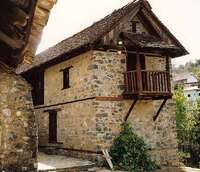 Monastery of Agios Ioannis Lampadistis The monastery of Agios Ioannis Lampadistis is situated in a central area of the Troodos mountain range, in the valley of Marathasa. It is built on the east bank of the river Setrachos, opposite of the village of Kalopanagiotis. The exact founding date of the monastery is unknown. The katholicon (monastery church), which is dedicated to Saint Herakleidios, is dated to the 11th century. Among the wall-paintings of the narthex there is an inscription, dated to the 15th century, which describes this church as “katholiki”, i.e. the principal parish church of the village. According to other written sources the monastery functioned until the beginning of the 19th century. Since then it has been used as a church. The group of buildings which survives today is the result of constructions and renovations of different periods. The main monastery church is a domed cross-in-square structure, dated to the 11th century. In the 12th century the chapel of Agios Ioannis Lampadistis was added to the north of the first church, above the tomb of the Saint. This second chapel collapsed and was almost entirely rebuilt in the 18th century. In the middle of the 15th century a common narthex was built to the west of the two churches. During the second half of the 15th century a vaulted chapel was added to the north of that of Saint Ioannis. It became known as the 'Latin chapel' because of the assumption that it was built for the Latins (Catholics). Sometime between the 15th and the beginnings of the 18th century), a timber roof covered with flat hooked tiles sheltered the entire roof complex. As a result of its tripartite character, the building acquired an external image of a large building covered with a timber roof. Apart from the complex of the three churches there are other monastic buildings including cells, auxiliary rooms and an oil press.